📷 Paul Walter, CC BY 2.0, via Wikimedia Commons
What to see diving in Cape Verde? 8 must-see encounters
No large coral reefs in Cape Verde, but volcanic seabeds, caves and dense Atlantic wildlife, just a few hours' flight from Europe. Nurse sharks, turtles, humpback whales, lava tunnels and wrecks: here's what you'll really see beneath the surface of the archipelago, where to see it and when.
When to Dive
Monthly overview of conditions in this destination.
| Jan | Feb | Mar | Apr | May | Jun | Jul | Aug | Sep | Oct | Nov | Dec | |
|---|---|---|---|---|---|---|---|---|---|---|---|---|
| Climate | ☀️ | ☀️ | ☀️ | ☀️ | ☀️ | ☀️ | 🌤️ | 🌦️ | 🌦️ | 🌤️ | ☀️ | ☀️ |
| Water temperature | 21-25 | 21-25 | 21-26 | 22-26 | 23-27 | 24-28 | 25-29 | 26-30 | 26-31 | 26-30 | 24-28 | 22-26 |
| Sea temperature | 22-23 | 21-23 | 21-23 | 22-23 | 22-24 | 23-25 | 24-26 | 25-27 | 26-28 | 26-27 | 24-26 | 23-24 |
| Peak season | ● | ● | ● | ● | ● | ● | ● | |||||
| Sea conditions | ⭐ | ⭐ | ⭐ | ⭐⭐ | ⭐⭐ | ⭐⭐⭐ | ⭐⭐⭐ | ⭐⭐⭐ | ⭐⭐⭐ | ⭐⭐⭐ | ⭐⭐ | ⭐ |
| Humpback whales | ⭐⭐ | ⭐⭐⭐ | ⭐⭐⭐ | ⭐⭐ | ||||||||
| Loggerhead turtles (nesting) | ⭐⭐ | ⭐⭐⭐ | ⭐⭐⭐ | ⭐⭐⭐ | ⭐⭐ |
| Jan | Feb | Mar | Apr | May | Jun | Jul | Aug | Sep | Oct | Nov | Dec | |
|---|---|---|---|---|---|---|---|---|---|---|---|---|
| Climate | ☀️ | ☀️ | ☀️ | ☀️ | ☀️ | ☀️ | 🌤️ | 🌦️ | 🌦️ | 🌤️ | ☀️ | ☀️ |
| Water temperature | 21-25 | 21-25 | 21-26 | 22-26 | 23-27 | 24-28 | 25-29 | 26-30 | 26-31 | 26-30 | 24-28 | 22-26 |
| Sea temperature | 22-23 | 21-23 | 21-23 | 22-23 | 22-24 | 23-25 | 24-26 | 25-27 | 26-28 | 26-27 | 24-26 | 23-24 |
| Peak season | ● | ● | ● | ● | ● | ● | ● | |||||
| Sea conditions | ⭐ | ⭐ | ⭐ | ⭐⭐ | ⭐⭐ | ⭐⭐⭐ | ⭐⭐⭐ | ⭐⭐⭐ | ⭐⭐⭐ | ⭐⭐⭐ | ⭐⭐ | ⭐ |
| Humpback whales | ⭐⭐ | ⭐⭐⭐ | ⭐⭐⭐ | ⭐⭐ | ||||||||
| Loggerhead turtles (nesting) | ⭐⭐ | ⭐⭐⭐ | ⭐⭐⭐ | ⭐⭐⭐ | ⭐⭐ |
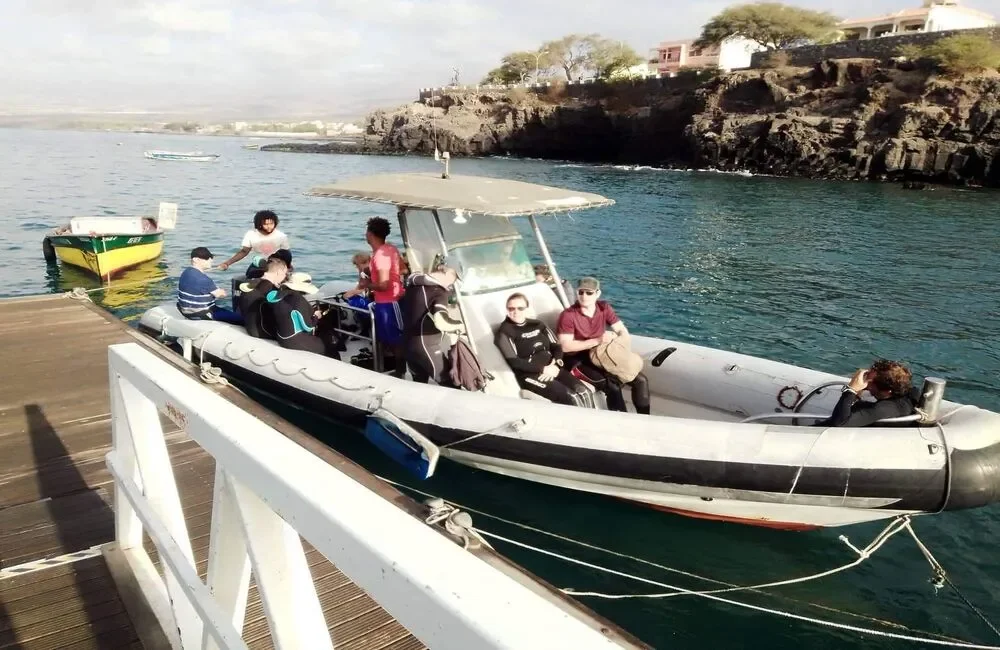
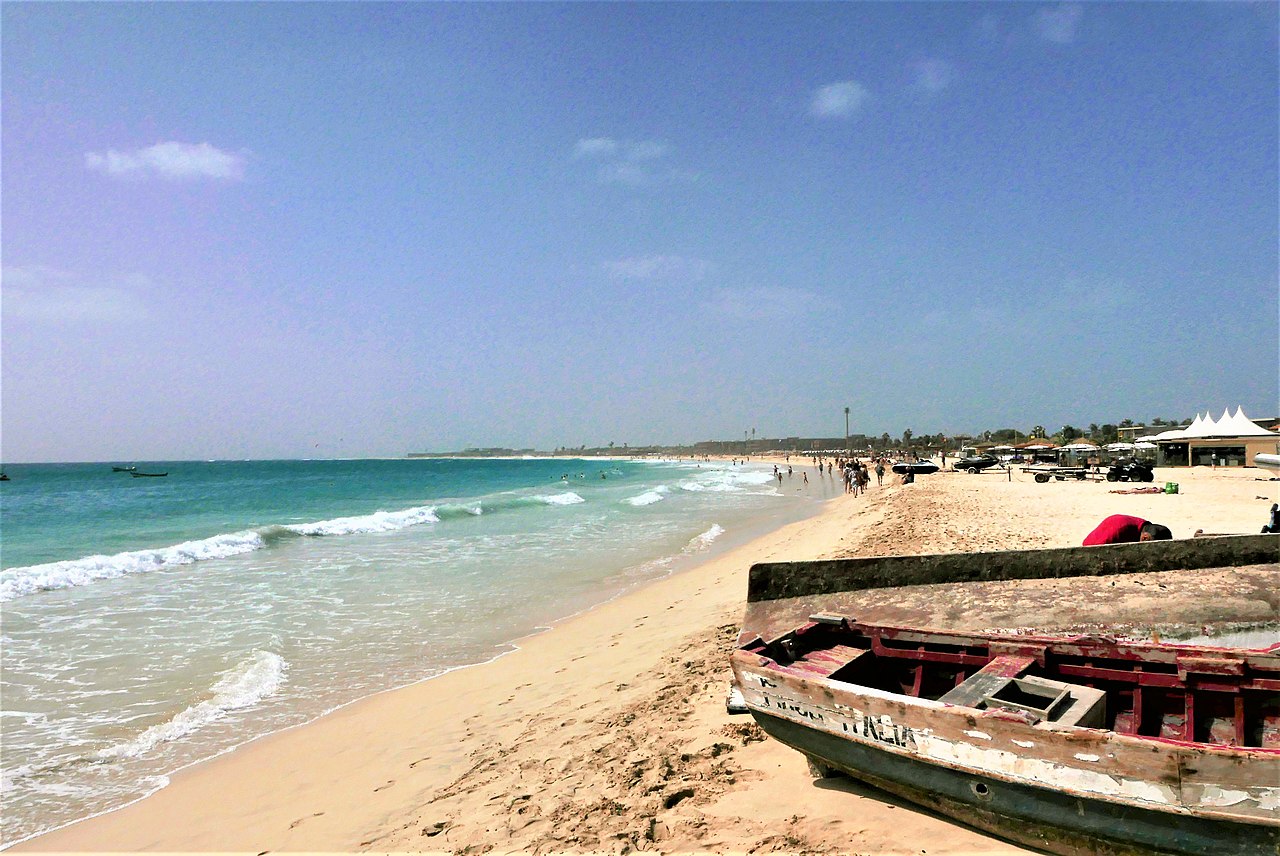
About 500 kilometers off the coast of Senegal, Cape Verde is a volcanic archipelago in the middle of the Atlantic. Diving is mainly done at Sal, from Santa Maria, but also at Boa Vista, Santiago, and São Vicente.
The seabed is mineral-rich: lava flows, drop-offs, arches, and rocky plateaus where fish congregate. Here are the eight encounters that make the destination famous.
1. Nurse sharks
This is the most regular encounter. Nurse sharks spend the day resting under overhangs and at the bottom of caves, often in groups. At Sal, the dive site of Três Grutas features three caverns where they rest among soldierfish. Harmless and not easily frightened, they allow close observation, provided they are not disturbed.
2. Loggerhead turtles
Cape Verde hosts one of the world's largest populations of loggerhead turtles. They come to nest on the beaches from June to October, especially at Boa Vista and Sal. During this period, encounters while diving are much more frequent, sometimes from the very first meters.
3. Humpback whales
From February to May, humpback whales come to the Cape Verdean waters to reproduce, peaking in March and April. They are observed from the surface during dedicated trips, mainly around Boa Vista. Encountering them underwater remains exceptional, but it is common to hear their songs during a dive.
4. Young lemon sharks of Shark Bay
On the east coast of Sal, Shark Bay serves as a nursery for young lemon sharks. They are observed on foot, in water up to waist height. It's not a dive, but it's the most popular excursion on the island between two sea trips.
5. Rays
Stingrays and eagle rays frequent the sandy bottoms at the foot of drop-offs. Depending on the site and the season, it is also possible to encounter manta rays and mobulas, especially when the water is rich in plankton at the end of summer.
6. Schools of fish and pelagics
The Cape Verdean rocks are covered with very dense schools of grunt, seabream, and soldierfish. Moray eels, trumpetfish, parrotfish, groupers, and lobsters occupy the crevices. Offshore, on the plateau of Choclassa, trevallies, tunas, barracudas, and wahoos pass through the blue when the sea allows it.
7. Lava tunnels and caves
The landscape is an attraction in itself. At Buracona, on the west coast of Sal, lava tunnels lead to a cave lit by a skylight. Arches, chimneys, and overhangs are found on many sites, at accessible depths.
8. Shipwrecks
Several shipwrecks rest at shallow depths near Santa Maria, some deliberately sunk to create artificial reefs. Colonized by sponges and schools of fish, they are accessible from the first level. Boa Vista also has numerous ancient shipwrecks around its shallow waters.
When to go?
You can dive in Cape Verde all year round, in water between 21 and 28 °C.
From June to November, the sea is usually calmer, the water warmer, and it's turtle season. From December to March, the trade winds blow strongly and some exposed sites become difficult to access. From February to May, the water is cooler but it's whale season.
Visibility is usually between 15 and 30 meters. A 5 mm wetsuit is suitable most of the time, and a 7 mm in late winter.
FAQ
Are there coral reefs in Cape Verde?
No, not in the sense of the Red Sea or Maldives reefs. The seabed is volcanic, with scattered corals, sponges, and gorgonians. The interest in diving lies in the relief and the density of fish.
Can you see sharks while diving in Cape Verde?
Yes. Nurse sharks are observed very regularly, and young lemon sharks can be seen at Shark Bay. Other species are occasional encounters.
Is Cape Verde suitable for beginners?
Yes. Several dive sites in Sal are shallow and sheltered, and dive centres offer baptisms and training all year round. However, you dive in the Atlantic: the swell and current make some sites more demanding.
Sal or Boa Vista?
Sal has the most dive centres and sites, with caves, wrecks, and dives for all levels. Boa Vista is quieter and better positioned for whales and turtles.
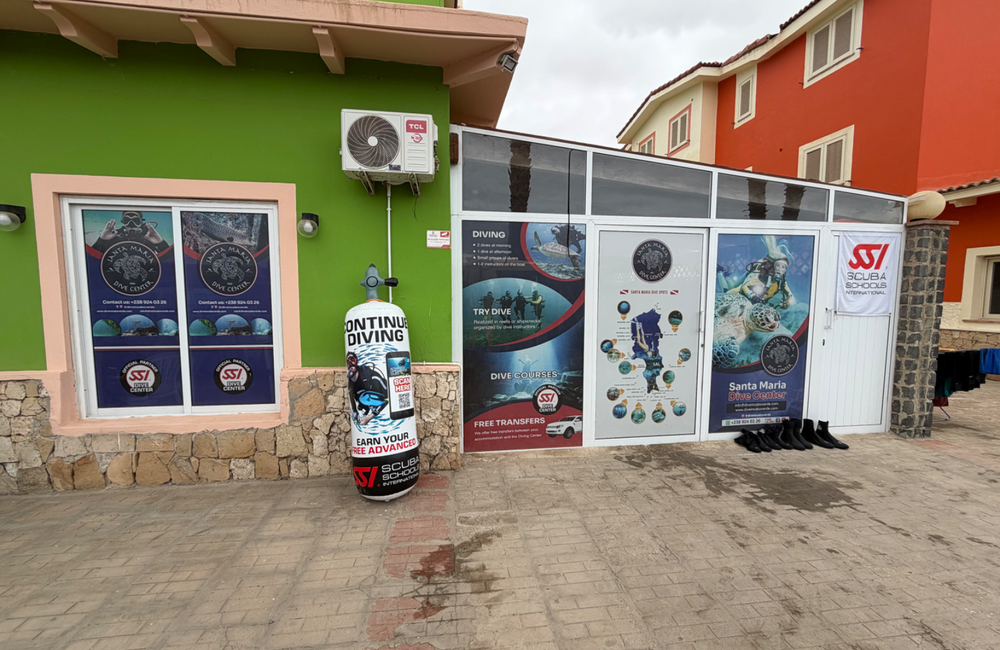
Partner dive centers in this destination
+ List my centerBook directly with our verified dive centers.